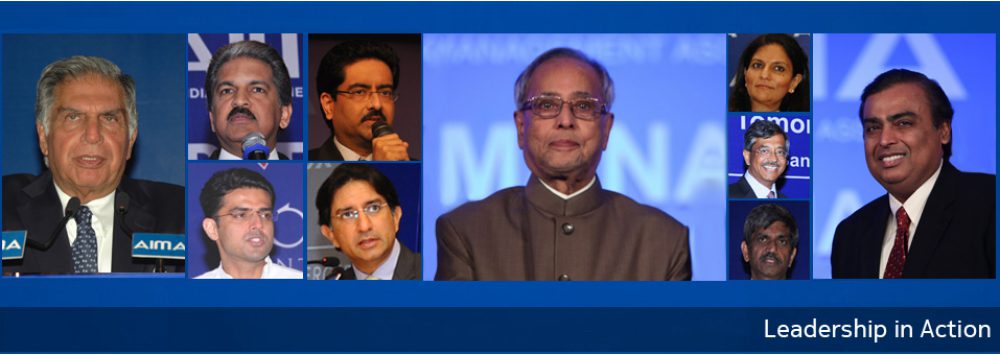

India’s growth is driven by macroeconomic stability and the 3S framework- Stability, Scalability and Strategic Autonomy, ensuring resilient, quality-led growth. Backed by strong reforms and infrastructure expansion, the economy continues to scale new heights, said Hon’ble Minister Jyotiraditya M Scindia, Ministry of Communications and Development of North Eastern Region, GOI, at AIMA’s 11th National Leadership Conclave.
India’s growth story today is no longer defined by scale alone, but by the character of that growth, its resilience, inclusivity, and long-term vision. In an increasingly uncertain global environment, what sets India apart is not just performance, but the ability to sustain and strengthen that performance over time.
At the core of this transformation lies what I describe as the 3S framework—Stability, Scalability, and Strategic Autonomy.
Stability is reflected in India’s strong macroeconomic fundamentals and consistent growth trajectory over the past decade. Scalability defines our ability to implement change at an unprecedented level, reaching over a billion people with precision and speed. Strategic autonomy ensures that our growth remains secure, sovereign, and adaptable in a rapidly evolving geopolitical landscape.
This framework is visible across sectors. India has emerged as one of the world’s leading manufacturing hubs in areas such as mobile phones and automobiles. Our infrastructure development, from highways and airports to railways, has accelerated at a pace and scale that is globally competitive. At the same time, our commitment to inclusion is evident in lifting millions out of poverty and ensuring access to healthcare and welfare through some of the world’s largest social programmes.
A defining pillar of this transformation has been India’s digital public infrastructure. Platforms like UPI and Direct Benefit Transfer systems have fundamentally changed how services are delivered—bringing transparency, efficiency, and scale to governance. These are not incremental improvements; they represent a structural shift in how the state and citizen interact.
Even amid global instability, whether in energy markets, supply chains, or geopolitics, India has demonstrated the ability to respond with coordination and clarity. A whole-of-government and whole-of-nation approach has enabled us to navigate challenges while continuing to protect growth and stability at home.
The next phase of India’s journey will be defined by how effectively we build on this foundation. It requires a continued focus on reinventing with purpose, scaling with efficiency, and serving with sustainability. In sectors such as logistics and communications, we are already working towards transforming legacy systems into globally competitive networks, capable of supporting both domestic growth and international ambition.
India today stands at an inflection point. The coming decade presents unprecedented opportunities, from expanding digital connectivity to advancements in AI, green energy, and next-generation infrastructure. These are not distant possibilities; they are active areas of policy and execution.
The role of government in this journey is evolving, from regulator to facilitator and partner. Growth at this scale can only be achieved through collaboration between public institutions, private enterprise, and citizens.
The vision of a Viksit Bharat by 2047 is not aspirational rhetoric, it is a strategic direction. The foundations have been laid. What lies ahead is the collective task of building on them with confidence, discipline, and ambition.
Watch the full session- https://www.youtube.com/watch?v=dxC-clnb7qM&t=349s


