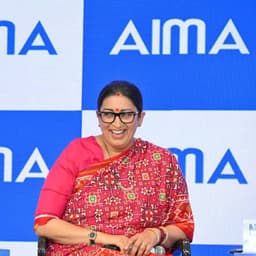
Women, power and the new Indian leadership narrative

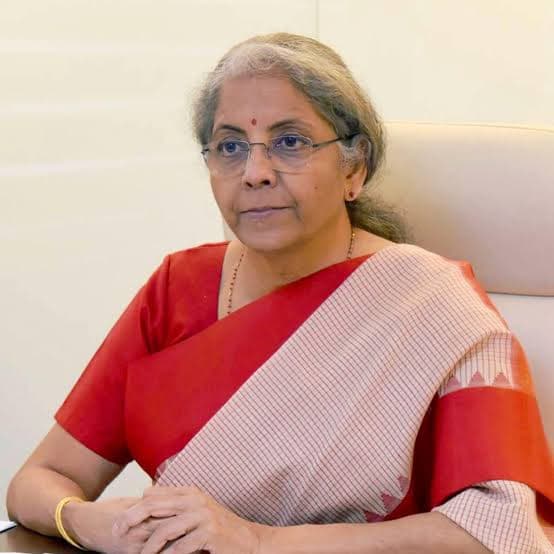
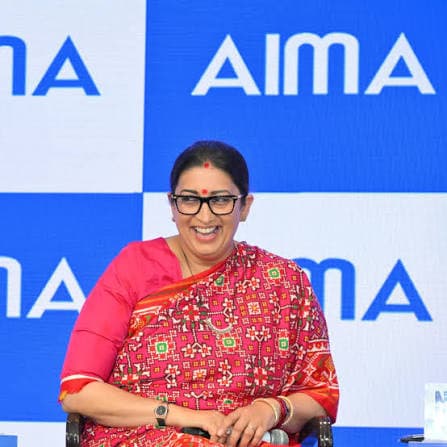
Women must not treat success as a concession or token, but earn it through talent, resilience and confidence, letting their capability command genuine respect, said Ms Smriti Zubin Irani, Former Union Cabinet Minister, Government of India and Young Global Leader, World Economic Forum at AIMA’s 70th Foundation Day and 20th National Management Day.

At a time when we are celebrating progress in women’s leadership, I believe it is equally important to question some of our long-held assumptions. For years, there has been a belief that education and corporate exposure will naturally translate into equity. If that were truly the case, we would not be witnessing the persistent gaps that continue to exist across organisations.

The reality is that while women form a significant share of the workforce, their representation declines sharply as we move up the corporate ladder. I often describe this as a “broken ladder.” The issue is not a lack of talent—there is absolutely no dearth of capable, qualified women. The real concern lies in the absence of a cohesive and collaborative effort across industry leaders to address this challenge with urgency and intent. Identifying the problem is one thing; acting on it meaningfully is quite another.

Another dimension that deserves far greater attention is the psychological environment within organisations. While legislative frameworks and policies have been put in place, the question we must ask ourselves is whether women feel secure enough to fully rely on them. The hesitation to report issues or even to avail benefits like extended maternity leave often stems from a deeper fear—of being judged, sidelined, or losing growth opportunities. These are realities that policy alone cannot fix.

I also believe we must stop framing these challenges solely as “women’s issues.” The desire to build a family, to raise children, or to balance professional and personal responsibilities is not exclusive to women. These are shared societal realities. The way leadership responds to them determines whether organisations truly become inclusive or remain selectively accommodating.

If we are serious about driving change, we must connect the conversation on equity with economics. Advocacy, while important, is not enough. When organisations clearly see and understand the business value of having more women in leadership, the shift from intent to action becomes far more likely. Evidence exists globally—we simply need to reinforce and apply it consistently.

At the same time, I would urge women to take ownership of their own journeys. Systems will evolve, but they may not do so fast enough. We must be prepared to assert our value, negotiate with clarity, and create opportunities where they do not exist. If a ladder is not offered, we must be willing to build one.

I have always believed that success should not come with a qualifier. I do not aspire to be recognised as the best woman in the room, I aspire to be recognised as the best in the room. That distinction is critical.

Real change will require effort at every level—within organisations, within leadership, and within our own homes. Inclusion is not something we merely talk about; it is something we must actively practice, every single day.

Watch the full session- https://www.youtube.com/watch?v=sdwKmcu_qz0&t=12s

Share

India’s big opportunity: Managing the turns and the U-turns in the world

Mr Amitabh Kant, India's G20 Sherpa, Government of India, at AIMA’s 10th National Leadership Conclave

Mr Amitabh Kant, India’s G20 Sherpa, Government of India, at AIMA’s 10th National Leadership Conclave

India can turn global disruption into opportunity by leading in green, digital and AI innovation, said Mr Amitabh Kant, India’s G20 Sherpa, Government of India, at AIMA’s 10th National Leadership Conclave.

We are living through a seismic reconfiguration of the global order. It’s not just about tariffs or trade wars—it’s about the tectonic shifts in geopolitics, economic globalisation, and technology that are reshaping our world. From my perspective, these changes present not a crisis, but a once-in-a-generation opportunity for India to assert itself on the global stage.

Continue reading

Share

Stakeholder Management, Business Ethics and the Challenges

Prof R. Edward Freeman at AIMA's LeaderSpeak session.

Prof R. Edward Freeman at AIMA’s LeaderSpeak session.

Balancing stakeholder interests, transparency, and authentic CSR is key to building trust, loyalty, and sustainable success in corporate governance, said Prof R. Edward Freeman, Stephen E. Bachand University Prof of Business Administration, Elis and Signe Olsson, Prof of Business Administration, University of Virginia Darden School of Business at AIMA’s LeaderSpeak session.

When we look at sacred texts like the Vedas or the Mahabharata, we see that the core idea is about taking responsibility for the impact of our actions, not just for ourselves, but for all stakeholders those who are well-off as well as those who are struggling. This is where the concept of stakeholder capitalism comes from. Business ethics shouldn’t be separated from business operations. The traditional narrative that business is solely about making money for owners or shareholders no longer fits the reality. Business is not just about profits or maximising earnings. Instead, it’s about creating value and contributing positively to the world.

Continue reading

Share

Towards Viksit Bharat @2047

Prof Veezhinathan Kamakoti, Director, IIT Madras at AIMA's LeaderSpeak session

Prof Veezhinathan Kamakoti, Director, IIT Madras at AIMA’s LeaderSpeak session

Investing in digital infrastructure, research, and a technology-driven education system is crucial to realising the vision of a ‘Viksit Bharat 2047’ and shaping India’s future as a developed nation, said Prof Veezhinathan Kamakoti, Director, IIT Madras at AIMA’s LeaderSpeak session.

As we envision India as a knowledge and technology superpower, it’s essential to build a society rich in culture, inclusivity and prosperity, a ‘Viksit Bharat’. We need to develop a self-reliant India, that reflects our diverse identity, rooted in our heritage while embracing innovation. To realise this, it’s crucial for us to create an environment where every individual has the freedom to thrive in their unique capabilities, with the right education and opportunities.

Continue reading

Share

Unshackling Leadership in the Age of AI

Pradeep Khosla at AIMA’s 9th National Leadership Conclave

Pradeep Khosla at AIMA’s 9th National Leadership Conclave

Collaboration among industry, academia and government is key to ensuring responsible AI innovation and ethical standards, said Mr Pradeep Khosla, Chancellor, University of California, San Diego at AIMA’s 9th National Leadership Conclave.

I’d like to start by saying that AI is like the whole evolution of humankind and society is all about understanding nature, capturing nature, and using nature to improve productivity. Because we as human beings are very limited people in terms of our physical capacity to do work.

If you look at steam power, electricity, mechanical amplification, everything we did was to create like amplification of our capacity to produce more effectively, agricultural revolution was the same thing. So, I think if you think about AI, it’s about expanding our capacity, our mental capacity, expanding our ability to think in ways that we have not done before. Before we were the brawn part of it, now we are the brain part of it. So that’s what I think about AI.

Continue reading

Share

Afterburner: The next generation reforms

Mr Amitabh Kant, G20 Sherpa of India, Government of India

Mr Amitabh Kant, G20 Sherpa of India, Government of India

Mr Amitabh Kant, G20 Sherpa of India, Government of India highlighted India’s past successes and emphasised the need for agriculture to transition to manufacturing and sustainable urbanization, while advancing green goals and simplifying regulations at AIMA’s 51st National Management Convention.

 Last year, India grew at about 8.2%. We were the fastest growing large economy in the world and in the next three years we will overtake Japan and Germany to be the third largest economy in the world. In a world which is starved for growth, India is an outlier and India has emerged as a very resilient powerhouse driving growth.

Continue reading

Share

Net Zero and India at 100: Managing Growth with Sustainability

Arunabha Ghosh, Founder- CEO, Council on Energy, Environment and Water (CEEW) at AIMA’s LeaderSpeak.

Arunabha Ghosh, Founder- CEO, Council on Energy, Environment and Water (CEEW) at AIMA’s LeaderSpeak.

Net zero can be achieved through sustainable economic activities and collaborative policies involving governments, businesses, and society, said Mr Arunabha Ghosh, Founder- CEO, Council on Energy, Environment and Water (CEEW) at AIMA’s LeaderSpeak.

Climate change is an area which impacts every one of us. We know the volatility in precipitation and other factors that are the consequence of climate change. We have, the data is quite clear, as I believe, from the International Energy Agency, that approximately 50% of end energy consumption is in the form of heating and cooling. This may be in the form of both industrial heating and cooling, but also residential and institutional heating and cooling.

Continue reading

Share

The Indian Century: Managing Growth with Transformation

Mr. Amitabh Kant, India's G20 Sherpa, at AIMA’s 68th Foundation Day & 18th National Management Day.

Mr. Amitabh Kant, India’s G20 Sherpa, at AIMA’s 68th Foundation Day & 18th National Management Day.

India aims to become the world’s third-largest economy by 2027 through reforms like GST and digital initiatives, promoting growth in technology and sustainability, said Mr. Amitabh Kant, India’s G20 Sherpa, at AIMA’s 68th Foundation Day & 18th National Management Day.

India’s ambitious vision encompasses not only becoming the world’s third-largest economy by 2027 but also achieving remarkable growth through strategic reforms and technological advancements. Overcoming initial challenges like twin balance sheet issues and deficits, India has implemented significant reforms such as the Goods and Services Tax (GST), a modern bankruptcy law, and reduced corporate taxes, which have bolstered economic fundamentals.

Continue reading

Share

Modernizing forces through self-reliance

General Manoj Pande, PVSM, AVSM, VSM, ADC, Chief of the Army Staff, India at AIMA’s 9th National Leadership Conclave

General Manoj Pande, PVSM, AVSM, VSM, ADC, Chief of the Army Staff, India at AIMA’s 9th National Leadership Conclave

General Manoj Pande, PVSM, AVSM, VSM, ADC, Chief of the Army Staff, India emphasises the need for significant Indian Army upgrades for a robust domestic production base to assert India’s interests in disputes at AIMA’s 9th National Leadership Conclave.

I shall share my thoughts on the relevance of hard power in India’s rise and how we are shaping hard power capabilities and modernisation through self-reliance. Today the nation is charting a remarkable journey of progress and development. The overall rise of a nation can be said to occur when there is significant and continuous increase in its comprehensive national power. While economic power is the fountainhead of the growth of the nation, yet it is the military strength that lends it the ability to effect outcomes necessary.

Continue reading

Share

Making magic, breaking taboos: My story

Karan Johar at AIMA’s 9th National Leadership Conclave.

Karan Johar at AIMA’s 9th National Leadership Conclave.

The celebrated Producer, Director, Talk Show Host and Entrepreneur, Mr Karan Johar shared his journey into the Indian film industry, his vast knowledge of film direction and execution, and industry insights at AIMA’s 9th National Leadership Conclave.

Two things I think that I can say at age 52 having completed 25 years in the business where I’m at right now. One, I’m definitely going through a midlife crisis, and which is meant to be a joke by the way. And secondly, I’m immensely grateful to the masters that taught me their passion for celluloid that translated so beautifully on celluloid. The great works of Mr. Yash Chopra, Mr. Raj Kapoor, Mr. Suraj Bajatia, Mr. Satyajit Ray, Mr. Guru Dutt.

Continue reading

Share