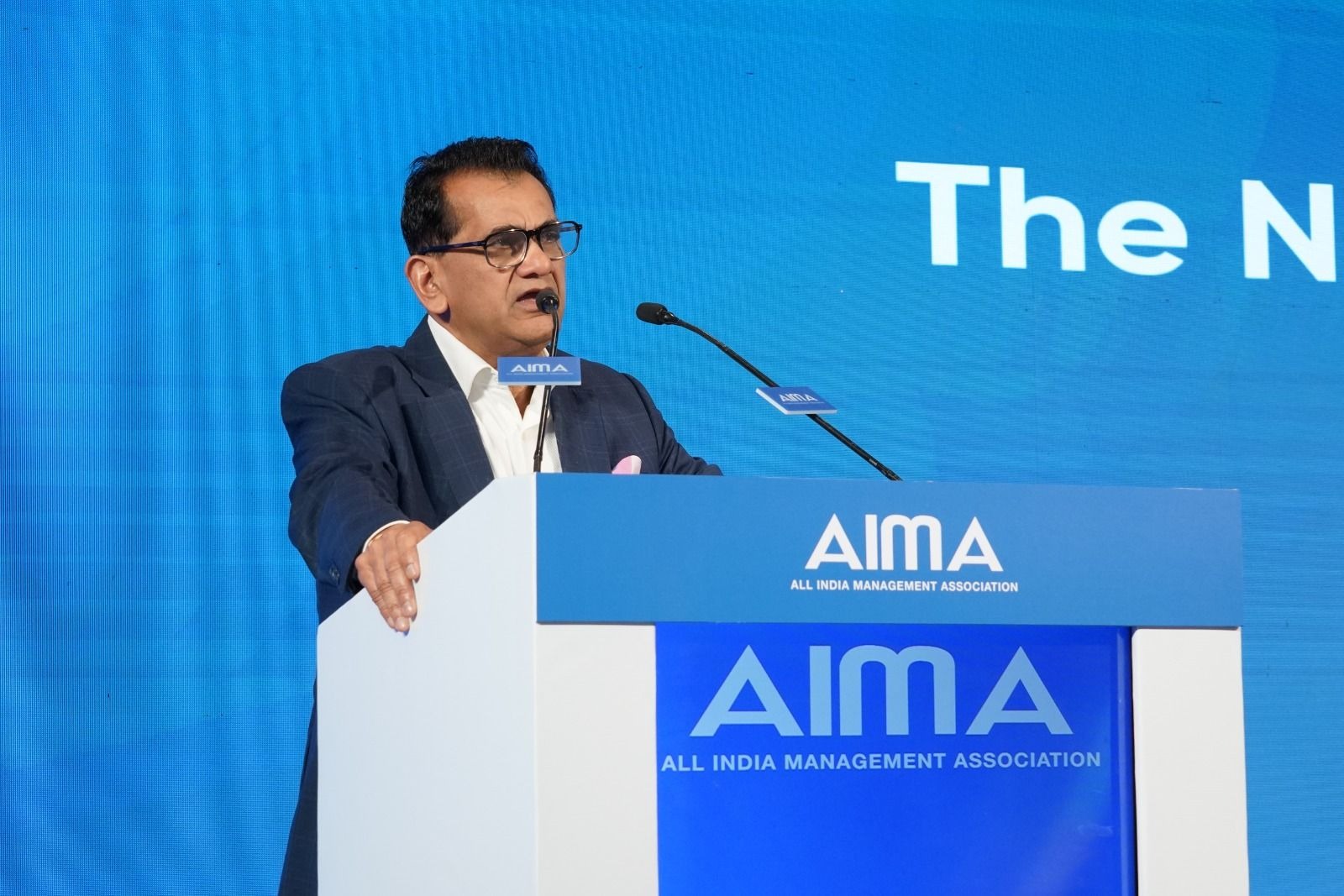
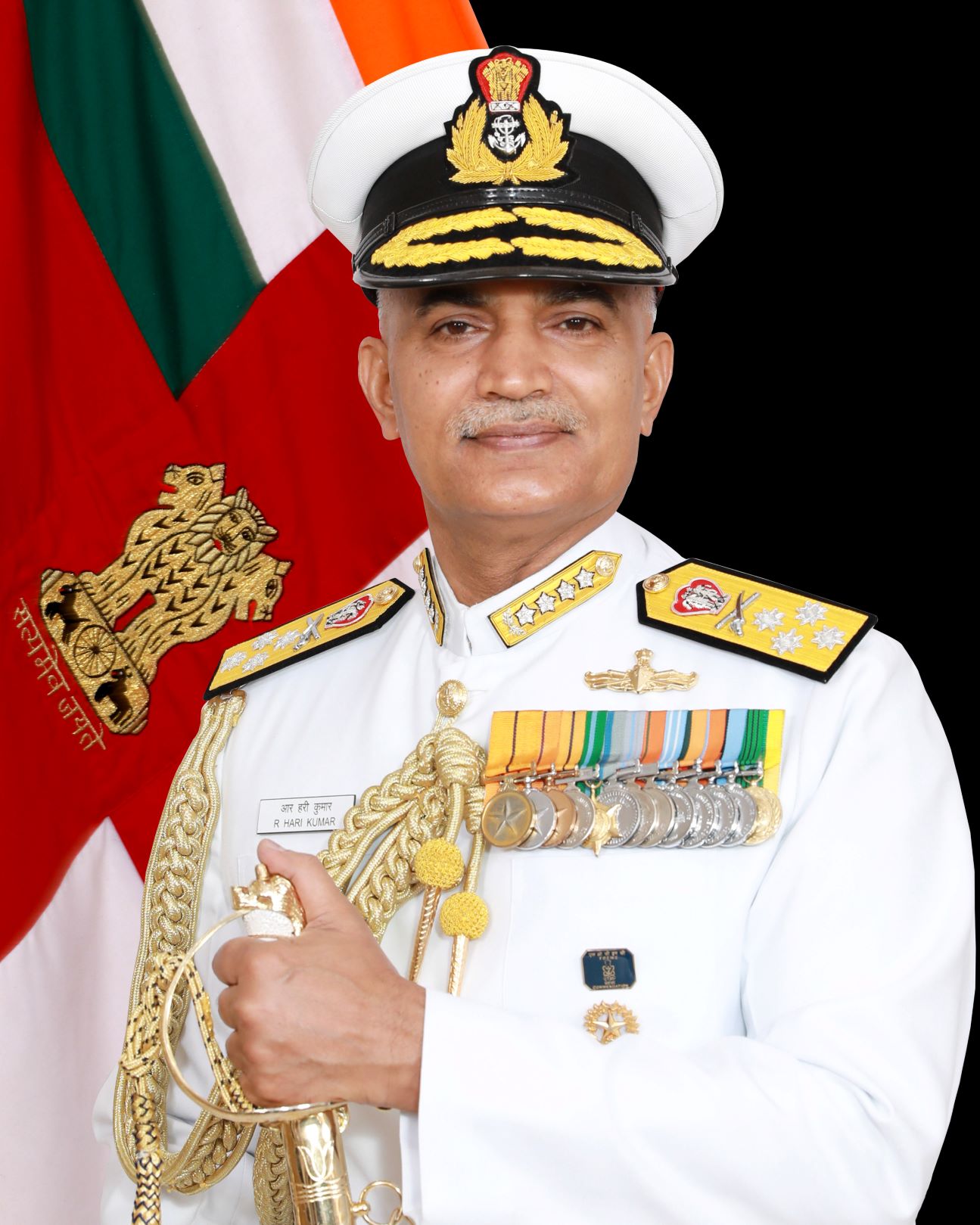
The Indian Navy has committed itself to giving 88% of its future contracts to Indian enterprises, which would also generate employment and build skills in the domestic economy, said Admiral R Hari Kumar, PVSM, AVSM, VSM, ADC, Former Chief of the Naval Staff at AIMA’s 49th National Management Convention.
I believe India’s maritime character is fundamental to our national identity. With water on three sides and the Himalayas to the north, our nation sits in the lap of the Indian Ocean—the only ocean named after a country. For centuries, the seas enabled India to pursue prosperity, trade, and cultural exchange. Our maritime heritage dates back to the third millennium BCE, with the dockyard at Lothal bearing testimony to advanced port infrastructure and seafaring capability. Indian traders connected Western Asia, the Mediterranean, and the Far East, reinforcing the enduring truth that command of the seas underpins national power.
I also draw attention to the lessons of history. India’s maritime decline followed the adoption of a land-centric outlook that weakened our naval strength and allowed colonial powers to dominate us from the sea. As Sardar K.M. Panikkar famously observed, India lost her independence only after she lost command of the seas. This lesson remains deeply relevant as we confront a rapidly evolving maritime and geopolitical environment.
I see modern India as unmistakably a maritime nation. With over 11,000 kilometres of coastline and nearly 1,400 islands, our economic well-being is inseparable from the seas. Nearly 95 percent of our trade by volume and about 86 percent of our oil imports are seaborne. The Indian Ocean Region carries 75 percent of global maritime trade and nearly half of daily global oil transfers, making it central not only to India’s interests but also to global stability and growth.
I view the current security environment through what I describe as a trinity of three imperatives: challenges at home, influences from outside, and disruptive paradigms. These include safeguarding national interests, managing great power rivalry, responding to climate-related threats, and adapting to emerging technologies, cyber vulnerabilities, and cognitive warfare. Traditional military challenges coexist with non-traditional threats such as terrorism, piracy, smuggling, and illegal fishing. The wars of the future will be multi-domain, spanning the seas, cyberspace, information systems, and the human mind.
I want to emphasise that the Indian Navy’s approach is to remain combat-ready, credible, cohesive, and future-proof. We maintain high operational readiness through mission-based deployments and a forward presence across our areas of interest, enabling us to act as a first responder. Leadership development, jointness with the other armed forces, and strong partnerships with like-minded navies remain central to our effectiveness. At the same time, we are investing in innovation by working closely with startups and academia to integrate niche and disruptive technologies.
I firmly believe that Atmanirbharta and nation-building are integral to our long-term vision. Every ship commissioned in recent years has been built in India, and the majority of those under construction are indigenous. The commissioning of INS Vikrant, with over 76 percent indigenous content, symbolises this transformation. Our capital investments are channelled back into the Indian economy, creating employment, skills, and technological capability.
I conclude by reiterating that a strong Navy underpins a strong nation. As India turns decisively towards the seas, sustained investment in maritime capability will secure our trade, protect our interests, and support our aspiration of becoming a developed nation by 2047.
Watch the full session- https://www.youtube.com/watch?v=X3q9-OJRIVQ