
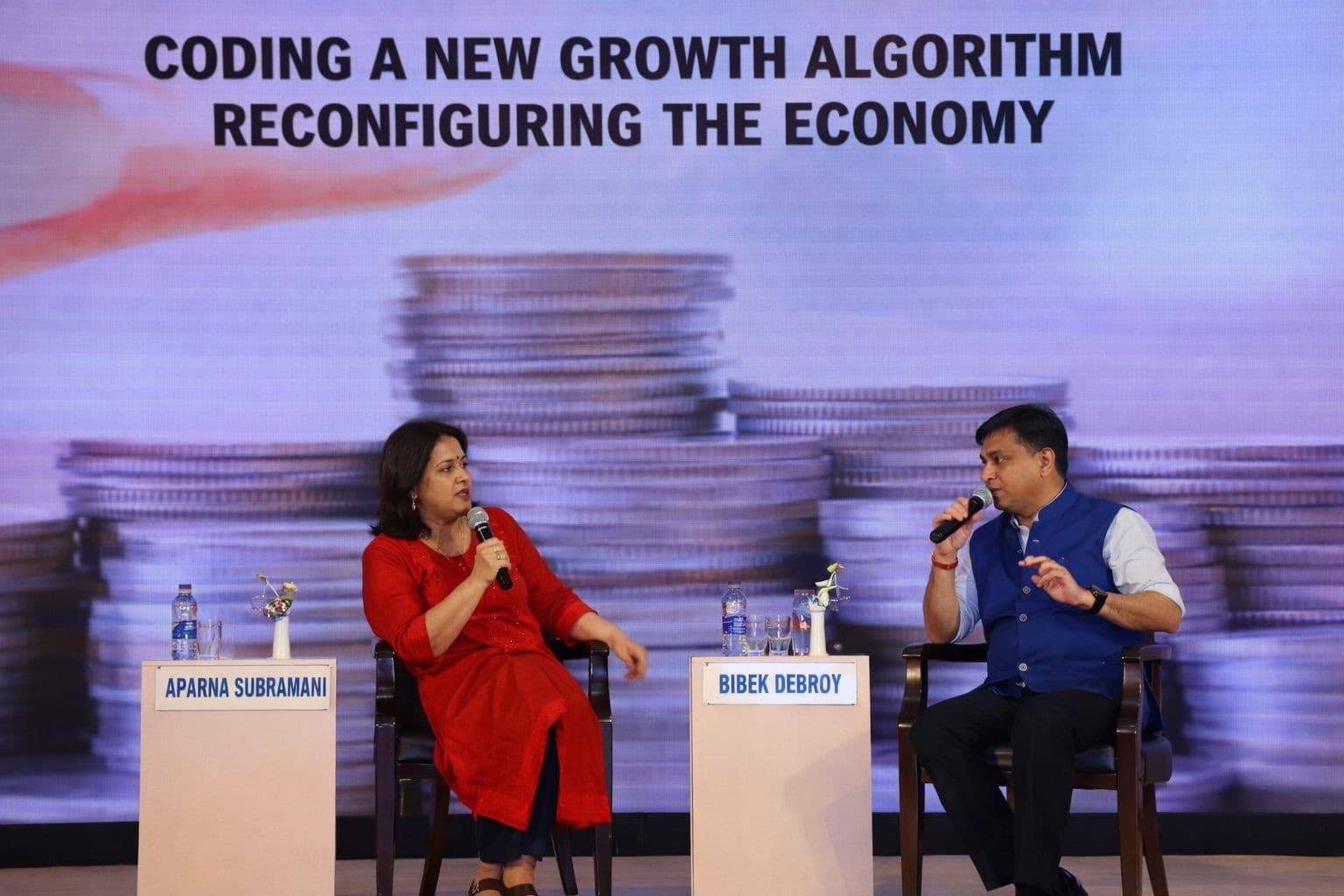
The world is seeing a potential trade war in the making. Do you believe those fears are real? Do you believe India will have to take sides on this one, or can we remain a mute spectator?
As far as taking sides is concerned, I’m very clear on whose side we are on. We’re on India’s side. Coming to the question of protectionism and the emerging global scenario. Let me be clear while indeed there are all kinds of protectionist tendencies popping up around the world, we in India remain committed to the globalized system, we are old experimenters in import substitution so our own history should more than adequately tell us that if we overdo import substitution or isolationist policies it always ends in tears. So while it is fair that occasionally you use some sorts of incentives to protect certain industries from dumping or maybe even do some protection for infant industries. Different countries have their own dynamics but in general we do need an open globalized system and in the end, we have to be willing to do deals with the rest of the world and the rest of the world has to be willing to do deals with us. But yes, the old system as it seems may have come to its grinding halt and let’s not blame the individual political leaders. My view is that the old system has come to a creaking halt at multiple levels. In the US there has been a simmering discontent about Chinese imports for a while, the fact of the matter is that it has come to a halt now.
So what’s the new world order? You’re saying globalization in its earlier form is not going to survive because it hasn’t served the developed world, which is why they are looking inwards. So, what’s the new form?
In the end, we need a set of global rules to trade so we need a multilateral system of trading and everybody intellectually agrees with it but what has happened over time for a variety of reasons is that we have ended up with these complex systems of trade deals. Some of them are bilateral trade deals, some of them are trading blocks, now we have TPP and so on. In fact, in the end, this is probably unworkable because it’s just too complicated after a while. In some sense, we are reaching a logical end of that old path of globalization. I’m a firm believer that there will be another round of globalization but I think those who think about the long history of these things need to begin to go back to first principles, rethink what this regime will be, and ensure that it is fair to all participants. Unlike the old globalized world, it must take account of the localized impact of these changes. I’m not entirely convinced that you can have a regime where a tiny globalized elite is the primary beneficiary while the rest of the population is ignored.
I’m glad that you’re bringing a fresh perspective to this debate. How should India brace itself for this new order of globalization? What will it mean for our own economy in terms of exports? Because our export model is still very aligned with the old globalized order.
The first point is we need to keep championing globalization. There is now a long debate that globalization led to inequality, but let me take that by the horns. What do you mean by inequality? In fact, while inequality may have gone up particularly in western countries inside each individual country but humanity as a whole is more equal than its ever been at least since the industrial revolution. China and India have become richer in the last few years, per capita income has gone up, poverty has come down. If you want to judge globalization, you must judge it for what happened between the countries, with China catching up with the West and India growing much faster than the rest of the world, inequality for the world as a whole has diminished because of globalization. This story of inequality rising is actually a very disingenuous one because this is an easy thing to use to justify protectionism in rich countries and build a narrative of victimhood which can then be used ironically against poorer countries which actually need to grow faster. So I think that story has to be countered that globalization is a good thing, we need to take account of the localized impact of this, we cannot simply brush them under the carpet, we need to think about the transition time, we need to invest into what needs to be done in order to take along these populations. The globalization over the last half a century has been a good thing for humanity overall.
The second point, how do we then engage with this going forward? And that actually is a very tricky thing. There are extraordinary technological changes happening, whether it is artificial intelligence, new forms of manufacturing processes, new energy sources and so on. We are at the cusp at where there’s going to be enormous rapid change. The problem is that nobody in the world has any idea of what it might lead to. Let me tell you this is nothing new, in 1898 the world's first urban conference was held, the main discussion in this urban conference in New York was horse manure and everybody was discussing how London would be under 5 ft of horse manure if nothing was done and within 15 years horses disappeared from the streets of all the major cities in the world. So, let no consultant, no matter how clever the presentation, tell you that they know where this is going. We don’t. The question is how do we adjust for what is very rapidly going to happen to all of us and how do we prepare for it. In the end, the most important thing is not our great ability to predict what changes will happen as a result of these technologies, which we have no idea about, but our ability to respond quickly to whatever happens. The most important thing about the T-Rex is not that it is big, has a large body and sharp teeth; the most important thing about the T-Rex is that it’s extinct.
You mentioned something important. Globalization will now have to be looked at in the local impact context. Given the kind of customs duties that have gone up in India after the Budget, some people have frowned upon this. After espousing and embracing globalization, why are we doing this? Is this the new normal? Is this the new reality? While we will talk about a globalized world, are we going to first protect our turf, just like America has?
We have not violated any international obligation. We as a country are allowed to adjust our customs duties as we deem fit. This should not be seen as a strategic withdrawal from globalization; rather, it is a tactical move for a variety of reasons to help emerging and infant industries in certain sectors. This is a tactical move, not a strategic one. We have remained well within our rights to do it. The fact of the matter is that we live in a changing world and we adjust to it. Yes, the world is evolving, and we will ensure that Indian interests are protected while continuing to honour our international obligations.
Let’s talk about the numbers. Growth figures of 7.2% to 7.5% made India the brightest spot in the global economy until about two years ago. Then came disruptive decisions such as demonetisation and GST, some of which were necessary. Are we back to a stage where the Indian economy is set for take-off?
At the very least I’m very pleased, that there is a loud debate about the banking system. This state of affairs has festered for a very long time. The fact that it’s being brought into the sunshine is in itself a good thing. There should be a debate. Let me clarify, however, privatization is not an immediate top of the table thing that was being considered by the government. There are many other things that we had to do immediately, including, this last part of the IBC process for the first top 12 defaulters. There are bigger picture things we need to think about. There has to be a public debate about privatization and governance. Have a debate about what do you mean by privatisation? There are many shades of such things.
But is privatization the answer to some of the ills that plague the Private sector banking?
Yes and no. Public sector banks do have a role to play in our economy. Public banks at times do what private banks won’t. But does that mean we should have 70% public sector banks? Maybe, maybe not. How do you go about changing this? There are many ways to do this. One could be to privatize the public banks, another could be to help private banks (better ones) grow faster. But then you can allow some of the public sector banks to grow faster. Some of them are not so bad; they’re pretty well run. There are many permutations and combinations of the things that can be done. All options should be considered. The important thing here is that while we are carrying out some very important measures on the resolution, auction, and liquidation of very big companies, we don’t take our eyes off the ball. More immediate action needs to be taken regarding governance, including fixing regulatory and supervisory lapses that have emerged with this recent fraud case. We also need to strengthen the boards and human capital in such banks. Attempts have been made in the past with the BBB, but clearly, we need to do more.
You say very pragmatically as a policymaker that we need to be agile and keep responding, and nothing can be cast in iron. Many people in the industry often say that the IBC norms need some changes. The government is of the view that changes are needed. How soon will we see the minor tweaks that are on the cards?
Always. The point I’m making is that this is a feedback-based government. Tell us what needs to be done. But remember, with each change you make, the system becomes more complicated. So beware of the unintended consequences of every change. In the end, all governance structures function by allowing for some flexibility at the edges, but the question is: what trade-offs are we willing to make? Every system involves trade-offs. When the law was originally introduced, it certainly had some trade-offs. Later, in November/December, we decided that it was better not to allow the old promoters to bid. Clearly, there is a cost to that decision because it restricts the number of bidders. However, for a variety of reasons, we believed that this broader change in the political economy was worth the price. We want to transform the entire ecosystem and prevent it from being undermined by rules that may have been too liberal. Similarly, we will continue to make changes, but every change comes with trade-offs. If those trade-offs are worthwhile from a policy perspective, they should be made. Nothing is cast in iron.
But as a policymaker, when you see it from the other side, the rules of the game have changed. We cannot play by the old rules. Is there greater acceptance, acknowledgement, and endorsement from the industry regarding these changes? What applied in the past doesn’t apply anymore—the debt can no longer be treated as equity, no matter who you are.
I think the culture has changed at multiple levels. Everybody accepts that we are playing by the new rules. People are figuring out what the new landscape means. I think everybody will be better off because, in the end, it is a much more rule-based and transparent system. That doesn’t mean this new system is cast in iron or doesn’t need further refinement. Some major framework changes may still be required, particularly in the areas of contract enforcement, dispute resolution, and the broader legal ecosystem. It is not without reason that the Economic Survey devoted an entire chapter to the need for reforms in the legal sector—not just the judiciary, but the entire ecosystem. The landscape needs to be rethought, and many areas require reform.
How would you assuage concerns within the Indian industry that, as part of the clean-up, there is an environment of suspicion and businesses are being viewed with distrust simply because they are in business?
I wouldn’t argue that. The core support base of the government comes from small businesses and industry. The political leadership is fully aware that some pain has been inflicted. In fact, it is quite remarkable how willing society has been to endure this pain in order to move to a new platform. Such willingness for change is rare in history. Everyone may complain, but people deserve credit for accepting these major reforms. This is a country where even minor issues have led to protests involving thousands of people. Yet, during demonetisation, people largely stood in queues patiently. Similarly, while there have been concerns about Aadhaar, most people have adopted it, and it has delivered significant benefits. Yes, Aadhaar has its limitations—even my own thumbprint doesn’t work, so I use an iris scan—but it is still an improvement over the previous system. Tens of thousands of fake teachers have been identified, and the Railways alone uncovered nearly 30,000 ghost employees. These are staggering numbers, and everyone was affected by such leakages. This clean-up is taking place not only at the national level but also across various states.
Just take the example of one state, Uttar Pradesh. It imposed strict controls on cheating, and nearly a million students dropped out of the examination process. That’s a staggering number. One could argue that this is an indictment of the education system—that so many students felt they could not pass without cheating, and that issue certainly needs to be addressed. But at the very least, the sanctity of the examination system has been restored.
Fair enough, and I don’t think anyone will doubt that. But a quick question on GST. You have been candid enough to say that there have been teething problems and that it hasn’t had the most ideal take-off. Perhaps, for a reform of that scale in a country like India, that was inevitable. But when will these teething troubles end, and is the relatively low level of compliance a concern for policymakers?
We could argue whether GST could have been implemented better. We debated it for 20 years; we could have debated it for another 20. The only practical way to introduce a major reform like this in India was to implement it first and then make improvements, because there were always going to be unintended consequences regardless of how much planning was done. Even countries with much simpler GST systems, such as Australia, experienced significant challenges. Almost every country that introduced GST faced teething troubles. Our system is not perfect. Could it have been simpler? Yes, it could have. In fact, the Central Government always preferred a simpler structure, but consensus with the State Governments could not be reached. Ironically, many of those states now agree that a simpler system would have been better. However, we do not want to overhaul the system again immediately; we want to let it stabilize first. Personally, I believe that a few years from now we should move toward a much simpler system. Ideally, most goods should fall under a single tax rate—say 15%—with only a few exceptions, such as luxury goods at 25% and essential food items at 5%. An average shopkeeper should be able to identify the applicable tax rate without referring to a detailed booklet. That is when you know the system is working well.
There is an intense debate following the Nirav Modi scam regarding the role of auditors, institutions, and regulators, and how failures in supervision contributed to the scam. Is there a need for a complete overhaul of the way auditors, institutions, and regulators function in India?
There certainly needs to be a discussion on accountability. This applies not only to regulators but also to professions that are expected to uphold truth and transparency, such as chartered accountants and auditors. Let me take you back to demonetisation to explain why signalling a regime change is important. It is extremely difficult to transition to a new equilibrium because the institutions and practices of the old system tend to pull you back into the previous way of functioning.
But would you still support demonetisation despite the fact that much of the money that was expected not to return eventually came back into the system?
It is actually a positive outcome that the money came back because the important question is not how much returned, but where that money is now. Today, it is recorded and traceable. That was only a small part of the objective of demonetisation. To reduce demonetisation to the amount of money returned is to miss its broader purpose. Demonetisation signalled a regime change. From that point onward, the old rules no longer applied. It was followed by the implementation of the Insolvency and Bankruptcy Code (IBC), the introduction of GST, and the rollout of the JAM Trinity. That is what demonetisation truly represented.
Watch the full session- https://www.youtube.com/watch?v=9gVQLJ-PzG0