The past couple of years have been challenging for India on multiple fronts. Not only did the country suffer the impact of the COVID-19 pandemic, but it also faced security threats along its borders. Although the military standoff with China along the Himalayan border has eased, it remains unresolved. At the same time, several other challenges continue to complicate India’s security environment.
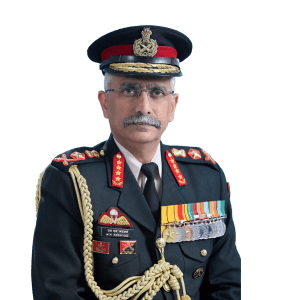
In response, the Indian Army had to continuously reinvent itself to address evolving threats. It prepared to safeguard the nation across multiple borders and dimensions while simultaneously dealing with the challenges posed by the pandemic. Speaking at AIMA’s 48th National Management Convention, General M. M. Naravane, PVSM, AVSM, SM, VSM, ADC, Former Chief of the Army Staff, Indian Army, shared how the Army adopted new strategies to remain fully operational and effective during this unprecedented period.
General Naravane began by describing the COVID-19 pandemic as a “Black Swan” event for India. However, he explained that the Army anticipated the challenges and prepared itself well in advance. According to him, forecasting and planning are the very essence of management. During the pandemic, the Army focused on two primary objectives—Force Protection and Force Preservation.
As a result, the Indian Army was prepared to meet every contingency. Proudly referring to it as a “Citizen Army,” he said that the Indian Army remains committed to the safety and security of the nation. It also actively supported the Government of India in managing the crisis. Owing to the Army’s strong medical infrastructure and preparedness, the number of COVID-19 cases within its ranks remained significantly lower than the national average. He attributed this achievement to the Army’s high standards of physical fitness, discipline, and the effectiveness of its junior leadership.
Even as schools, offices, factories, and shopping malls shut down during the pandemic, national security could not come to a standstill. Soldiers continued to perform their duties and safeguard the country’s borders. They trusted their leaders and remained committed to accomplishing their objectives despite difficult circumstances and limited resources. This resilience was possible because the Army had already planned and war-gamed various contingencies.
Managing one of the world’s largest armies while securing active borders prompted the leadership to reassess existing processes, improve systems, and reinvent operational procedures. The crisis also demonstrated the value of technology in strengthening organisational resilience and shaping new strategies. By embracing digital tools and letting go of traditional constraints, the Army emerged stronger as an organisation. Training academies and institutions remained fully functional by adopting digital platforms, while physical training activities were redesigned with appropriate distancing measures—many of which have since become standard practice.
General Naravane also emphasised that every border received equal attention and that no region was neglected. While the senior leadership developed the overall strategy, operational execution was entrusted to commanders on the ground, enabling swift and effective decision-making.
Concluding his address, General Naravane observed that the nation places immense trust in the Indian Army, and with that trust comes tremendous responsibility. Protecting the country and its citizens during times of crisis is a duty the Army takes seriously. As he remarked, “We can’t afford to fail as there are no runners-up in war.” He further added, “As leaders, we take up our responsibility seriously and try to do our best.”
Watch the full session – https://www.youtube.com/watch?v=UOuC9_2w11I